Fundamentals
Visit-based loyalty programs: the complete guide for local businesses
Most loyalty programs fail for the same boring reason: customers don't understand them. Points, tiers, redemption math — every layer of complexity is another excuse for a customer to never come back.
Visit-based programs fix that. One visit equals one stamp. Hit the threshold, get the reward. This is the format that works best for local businesses, and this guide walks through how to design one that actually drives repeat visits.
Why visits beat points for local businesses
Points work for airlines, department stores, and credit cards. They rarely work for the coffee shop on the corner. A customer buying a $4.50 latte will not do mental math about how many points they earned this morning.
Visits are easier to track, easier to communicate, and easier to celebrate. Customers feel their progress — five stamps visible on their wallet pass is a story; 450 points is a number.
There is a second, quieter advantage: visits align your program with the behavior you actually want. You want repeat foot traffic. Count that directly and reward it directly.
Pick the right visit threshold
On FanKit the threshold is between 3 and 20 visits. Most businesses land between 5 and 10. A useful rule of thumb: set the threshold at roughly 1.2 times a typical customer's monthly visit frequency. That way a regular earns their reward in about five weeks — close enough to feel achievable, far enough to be meaningful.
If your threshold is too low, you're giving away rewards to people who were already coming. If it is too high, customers give up halfway through and the stamps collect digital dust.
- Daily visit business (coffee, breakfast spot): threshold 8–12.
- Weekly visit business (restaurant, bar, car wash): threshold 6–10.
- Monthly visit business (barbershop, spa, vet, clinic): threshold 3–6.
Choose a reward your margins can defend
A good reward hits two numbers at once: high perceived value for the customer, low marginal cost for you. A free small coffee costs the shop maybe 40¢. To the customer it feels like 5 dollars.
A useful constraint when picking the reward: it should cost you less than 20% of the revenue generated by the visits that earned it. If a customer spent $80 over 10 visits, a reward that costs you more than $16 will slowly eat your program.
Avoid discounts on the whole bill. They cheapen the perception of your product and reduce total revenue. A free specific item is almost always a better reward than 20% off.
Recurring or one-time?
FanKit rewards can be set to recurring, which means the counter resets and the customer can earn the same reward again. For most local businesses, recurring is the right default. Loyalty is a habit, not a milestone.
One-time rewards make sense for onboarding bonuses or premium tier upgrades, not for the core loop. If customers only get one free coffee ever, they have no reason to keep stamping past visit 11.
Get the pass into their phone on visit one
The best loyalty program is worthless if customers never save it. Your first job is to make the first-visit install effortless.
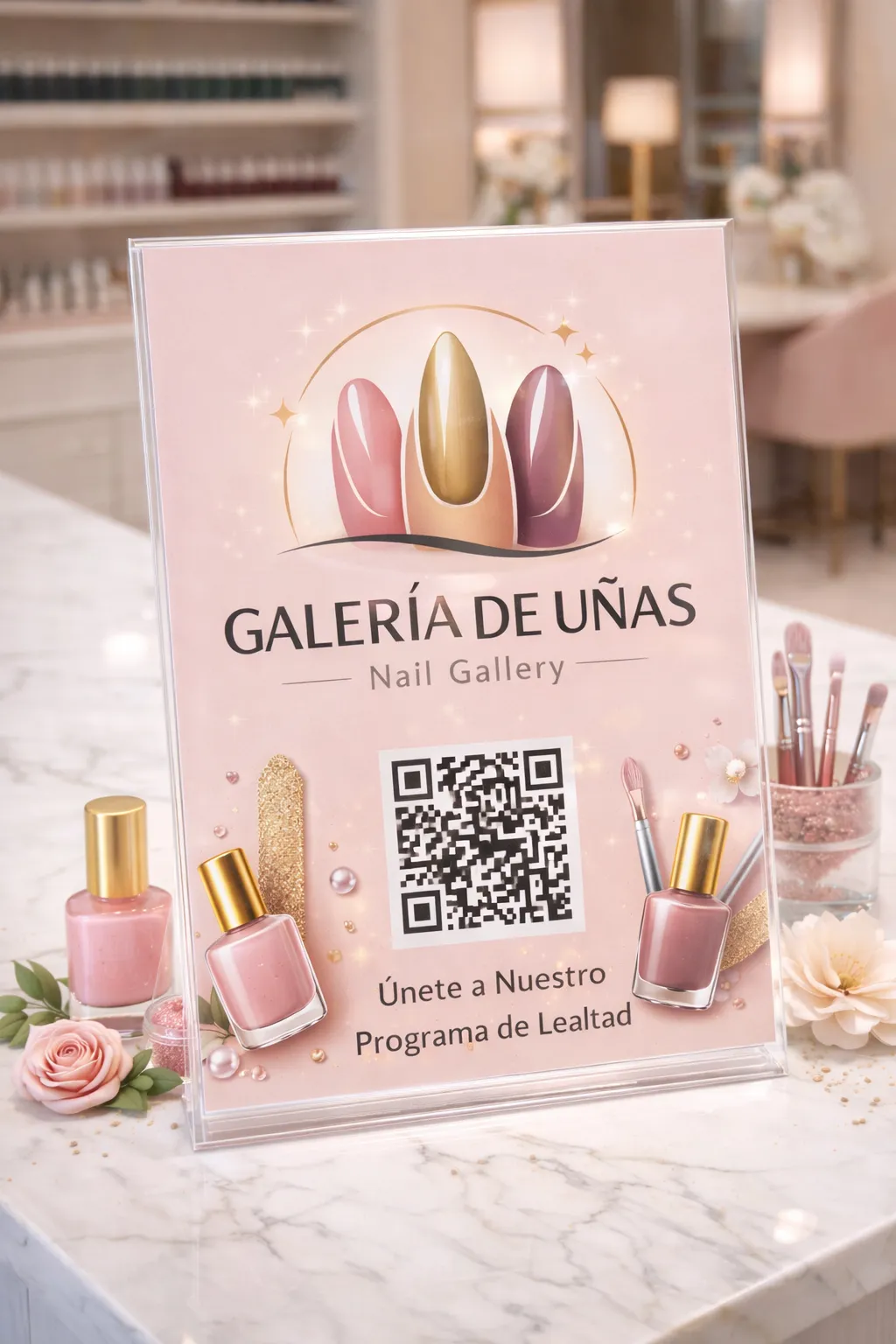
Put a small QR code next to the register, on the receipt, and on the table. Staff should mention it in one sentence: "Scan this and your next coffee stamps toward a free one." That is the entire pitch.
Avoid forms. Avoid apps. A wallet pass installs in two taps and lives on the customer's lock screen from then on.
Bring them back with push and SMS
A loyalty pass is not a passive sticker. It's a communication channel. The two messages that consistently perform are the ones closest to the customer's actual behavior.
Push campaign, "you're one visit away": fires when a customer is one stamp short of their reward. Behavior-triggered pushes like this tend to significantly outperform generic broadcasts.
SMS campaign, "we miss you": fires when a customer hasn't visited in twice their usual cadence. Keep the text under 140 characters and include the reward as the hook.
Avoid generic broadcasts. Customers learn fast to ignore anything that doesn't feel personal.
Measure what matters
Three numbers are enough for most operators. Visit frequency lift compares how often enrolled customers visit versus non-enrolled. Redemption rate tells you whether your threshold and reward are right. Thirty-sixty-ninety day retention tells you whether the program holds.
If enrolled customers aren't visiting noticeably more often than non-enrolled ones, your threshold is probably too high or your reward too small. If few customers are reaching the reward, they're giving up mid-card. If retention drops sharply around the two-month mark, your first reward isn't motivating a second cycle.
The mistakes that kill most programs
- Threshold too high. The program feels unreachable and customers stop caring by stamp three.
- Reward too small. If it does not feel meaningful, it does not drive behavior.
- Silent program. No push, no SMS, no staff mentioning it. The pass just sits on the phone.
- Staff not trained. Customers ask how it works and get confused answers.
- No reactivation. Lapsed customers drift away without a single message inviting them back.
Common questions
Do visit-based loyalty programs really work for small businesses?
Yes — they tend to work better than points-based programs at the neighborhood scale. A visit is a simple, visible unit of progress that customers can feel, and the rewards are easy to calculate against margin. The format suits daily, weekly, and monthly-cadence businesses alike.
How many visits should a customer need to earn a reward?
Most local businesses land between 5 and 10 visits. A useful rule of thumb is roughly 1.2× the monthly visit frequency of a typical regular. Daily businesses like coffee shops sit at 8–12, weekly ones like restaurants at 6–10, and monthly ones like spas at 3–6.
What makes a good reward?
A specific free item that has high perceived value and low marginal cost — not a percentage discount. The reward should cost less than 20% of the revenue from the visits that earned it, and it should feel like a gift, not a coupon.
Do I need an app for customers to join?
No. With a wallet pass, customers save the program to Apple Wallet or Google Wallet in two taps — no app download, no account creation, no form. That's the single biggest difference between a program that grows and one that doesn't.
How do I bring customers back between visits?
Push notifications and SMS, triggered by actual behavior. Two messages that consistently perform: a push when a customer is one visit from their reward, and an SMS when they haven't visited in roughly twice their usual cadence. Avoid generic broadcasts — customers learn to ignore them quickly.
Launch your visit-based program in under 10 minutes
FanKit handles the wallet passes, the visit tracking, and the SMS and push campaigns. You pick the threshold and the reward.
Create program free